Globeo blog
After the Storm Hits, Where Does the Crew Sleep? Disaster-Response Crew Lodging, Solved
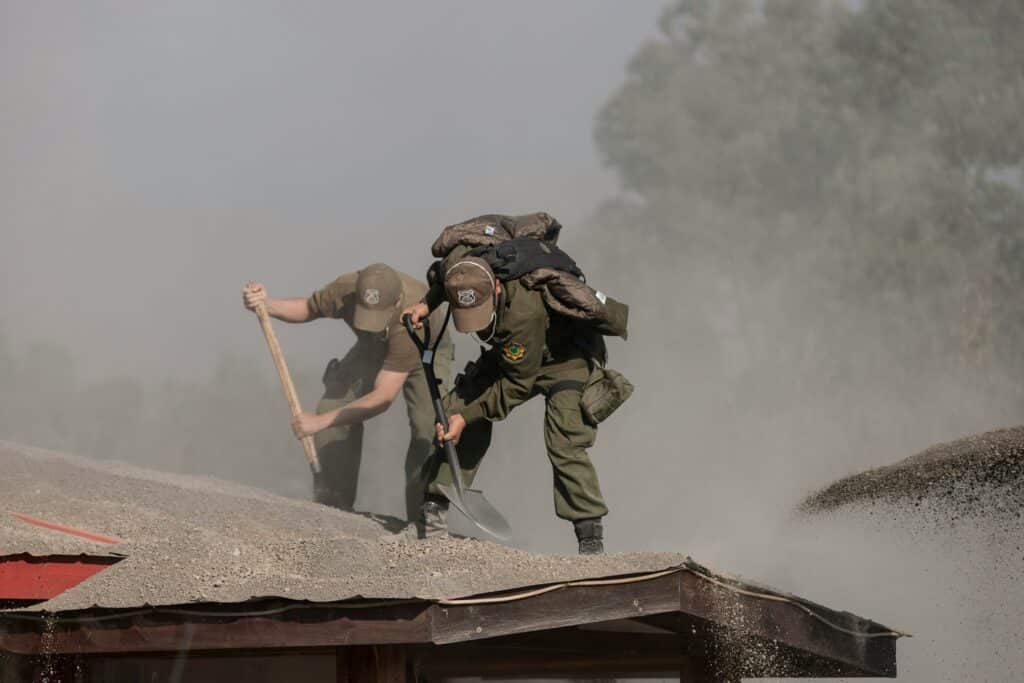
The eyewall comes ashore a little after two in the morning. By the time the sun is up, the wind has dropped and the water is starting to recede, and the phones at a dozen restoration firms are already ringing.
A regional water-and-fire restoration contractor three states away accepts the first work order before breakfast. By noon it has committed forty technicians to a single county on the Gulf Coast: extraction crews, drying techs, a contents team, two supervisors. They will be on the road by tonight. There is just one problem, and it is the same problem every single time. Where are forty people going to sleep when they arrive, in a county where every hotel room is already taken by evacuees, insurance adjusters, and the power crews who got there an hour ago?
That question is the quiet bottleneck inside every disaster response. The work order is the easy part. The lodging is what decides whether the crew is productive on day one or burning the morning driving sixty miles back from the only rooms they could find.
Disaster response crew lodging is a logistics problem, not a travel problem
The category mistake almost everyone makes is treating crew lodging like business travel. It isn’t. Corporate travel is a planned trip booked days ahead on an individual card, reconciled later through an expense report. Disaster-response crew lodging is the opposite on every axis: the booking horizon is hours, the decision unit is the crew rather than the individual, the schedule is set by the event instead of anyone’s calendar, the billing has to roll up to a job or cost code, and the paper trail has to survive a client or insurance audit months later.
Run that through a corporate travel tool or a consumer booking site and it breaks in predictable places: fragmented bookings, dozens of personal-card receipts, no consolidated record, and no way to flex when the crew count changes overnight. Workforce lodging needs its own model.
The first 72 hours: why the rooms disappear
When a hurricane, flood, or wildfire hits, demand for rooms near the impact zone spikes against a fixed and often physically damaged supply. Evacuees take rooms. Insurance adjusters take rooms. Utility mutual-aid crews take rooms; some host utilities have been known to secure every room in a town, and in tight markets they’ll rent an entire hotel outright. Government responders take rooms. And every restoration contractor in the region is calling the same front desks at the same time.
The math is brutal and it favors speed. The contractor who can get rooms confirmed near the disaster zone in the first few hours, ideally before the crew even rolls, keeps its people close to the work. The contractor still dialing individual properties ninety minutes in is already housing its crew an hour away, if it can house them at all. Last-minute crew lodging after a hurricane isn’t a booking task; it’s a race against everyone else who needs the same beds.
Who’s competing for those rooms, and who Globeo houses
Disaster recovery isn’t one workforce. It’s several, arriving in waves, each with its own dwell time and its own lodging needs:
Restoration and remediation contractors
Water, fire, mold, and large-loss catastrophe crews, often IICRC-certified teams, deploy for weeks at a time and need consistent, close-in rooms with reliable power and Wi-Fi so crews are rested and on site at first light.
Utility mutual-aid line crews
Out-of-state linemen on mutual aid assignments move fast and arrive early, sometimes before any base camp exists. Host utilities stand up staging within roughly a day, but the first crews on the ground often have to fend for themselves until lodging is organized.
Debris removal, tree, and roofing crews
The long tail of recovery. Wildfire debris and tree work alone can keep crews in the field for many months after the event, long after the cameras leave, a sustained lodging need, not a one-week surge.
The billing trap: lodging records that actually get paid
Here’s the part generic booking platforms never talk about, and it’s where contractors quietly lose money. Restoration work gets billed, to an insurance carrier, to the property owner or general contractor, sometimes to a program manager, and lodging is a line item on that bill. Getting it reimbursed cleanly means documenting it the way the payer expects: itemized invoices and receipts, a clear record of how many workers stayed and for how long, and costs broken out by job or cost code.
Now picture the alternative: forty technicians spread across nine motels, half of them paid on personal cards, no single record of who stayed where or for how many nights. That’s how a reimbursable cost turns into a write-off, or a billing dispute that drags on for months. A managed disaster-response lodging program produces one clean, auditable record, by worker, by night, by cost code, which is exactly what the billing file needs. The documentation isn’t an afterthought; it’s half the value.
What a managed disaster-response lodging program does
One call, one partner, one record. A purpose-built program does the things a contractor’s operations desk cannot do at 6 a.m. with crews already rolling:
It works a regional property network, so there are rooms to draw on the moment an event hits. It books rooms across the region within hours instead of calling front desks one at a time. It places crews as close to the job site as the market allows, and handles the operational details that matter to field crews: truck and trailer parking, early or 24-hour check-in, extended-stay setups for long deployments. It consolidates billing into a single invoice broken out by event, job, or cost code. And it keeps the documentation the client and their insurer will ask for. As crews ramp up, draw down, or shift counties, the program moves the bookings rather than starting the scramble over.
Why generic booking tools aren’t built for this
Generic corporate-travel platforms assume planned trips and individual travelers; they fragment billing across hundreds of itineraries and offer no real audit trail. Consumer booking sites are worse. Neither was built for a crew that has to be housed within hours, kept close to the job, and documented for billing. That’s a different job, and it needs a system designed for it.
Frequently Asked Questions
How do restoration contractors book hotels for crews after a hurricane?
Through a managed crew-lodging program that books across a regional network within hours of activation, places crews as close to the job site as the market allows, and consolidates billing into one auditable invoice, instead of calling individual front desks while the rooms disappear.
How fast can disaster-response crew lodging be arranged?
Within hours, because the rates and the property relationships are already in place. After a disaster the first few hours decide it: demand from evacuees, adjusters, utilities, and other contractors collides with a fixed, often-damaged room supply, so the rooms have to be confirmed before crews even roll.
Can I get one consolidated invoice for all crew hotel stays?
Yes. A managed program rolls every room, every night, and every crew into a single invoice broken out by event, job, or cost code, built for client and insurance reimbursement rather than a pile of personal-card receipts.
How do I document crew lodging for insurance and client billing?
A managed program produces source documentation (itemized invoices and receipts), verifies how many workers stayed and for how long, and breaks costs out by job or cost code, so the billing file holds up when the insurer or client reviews it, instead of leaving you with a pile of personal-card receipts.
Do you cover hurricanes, wildfires, and floods?
Yes, hurricanes, wildfires, floods, tornadoes, and winter storms, including the rural markets where recovery work lands and hotel inventory is thin.
Schuyler Bagwell, Director of Product Development, Globeo
Globeo mobilizes crew lodging for restoration contractors and utility crews responding to hurricanes, wildfires, floods, and winter storms across the United States. If your crews are about to deploy and the rooms are already going, talk to us.
Talk through this in your operation.
A 30-minute demo, a real person from the concierge desk on the call, and the numbers from your last crew rotation.